
AAC Blocks
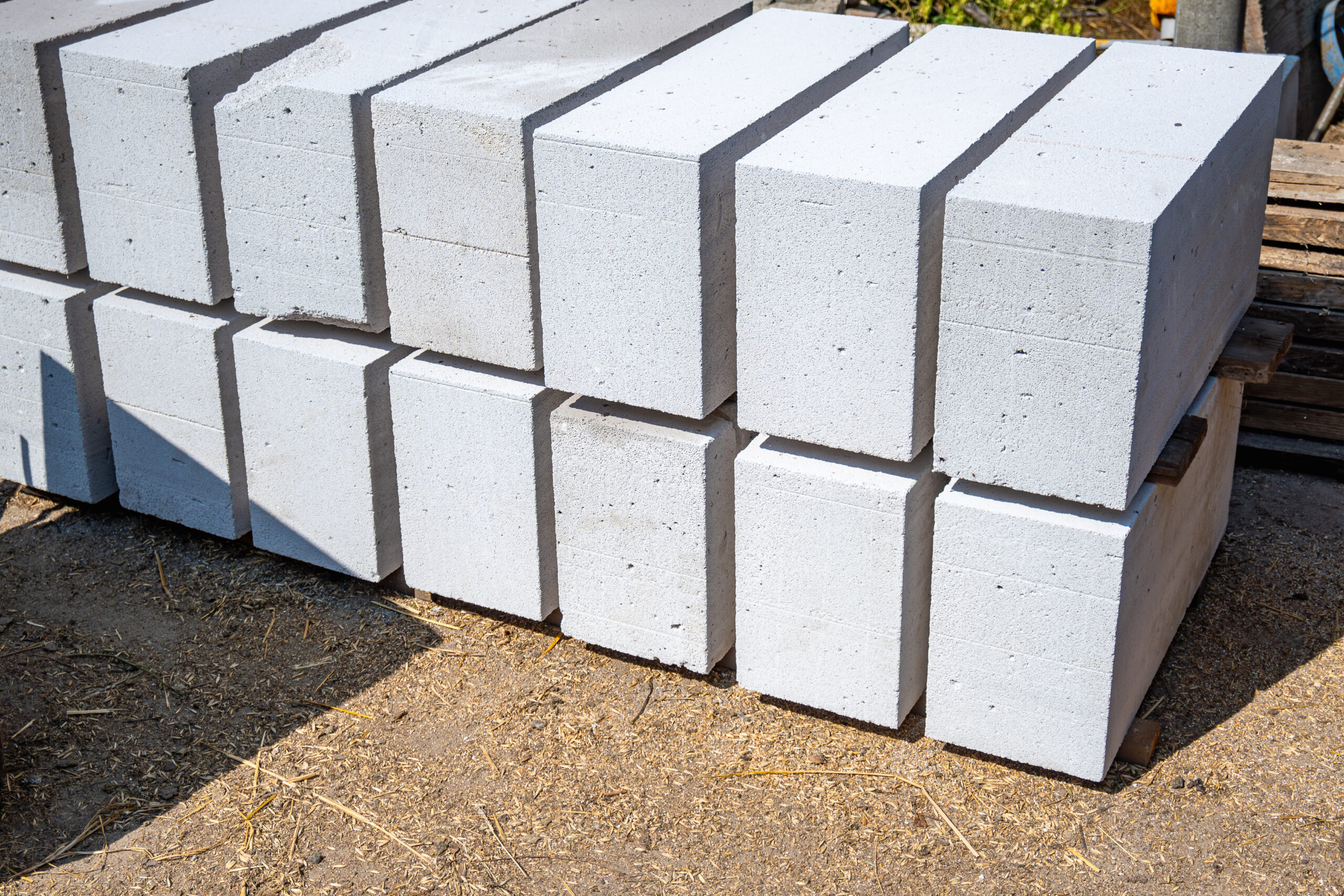
AAC Blocks (Autoclaved Aerated Concrete Blocks) are a modern building material widely used in construction. Compared to traditional clay bricks and concrete blocks, AAC blocks are lighter, stronger, and more energy-efficient. They help reduce the structural load of buildings and improve construction speed.
AAC technology has been used in the construction industry for more than 70 years. Because of its durability, thermal insulation, and environmental benefits, AAC blocks are widely used in residential, commercial, and industrial buildings.
Available Sizes of AAC Blocks
AAC blocks are available in different sizes to suit various construction requirements.
- The larger size of AAC blocks reduces the number of joints required during construction, which helps speed up the building process.
- AAC blocks are manufactured with high dimensional accuracy, ensuring uniform size and easy alignment during wall construction.
- Typical Height: 8 inches
- Width: 24 inches (length)
- Thickness Options: 4, 6, 8, 10, and 12 inches
- A standard 8 × 8 × 24 inch AAC block weighs approximately 33 lbs, making it significantly lighter than conventional concrete blocks.
Advantages of AAC Blocks
Lightweight
AAC blocks are approximately three times lighter than traditional bricks. This reduces the structural load on buildings and lowers transportation costs.
Excellent Thermal Insulation
AAC blocks offer excellent thermal insulation, reducing heat transfer and helping maintain comfortable indoor temperatures.
Fire Resistant
AAC blocks are non-combustible and can withstand fire exposure for several hours, making them a safe building material.
Sound Insulation
AAC blocks provide good acoustic insulation, reducing external noise and improving indoor comfort.
High Workability
AAC blocks are easy to cut, drill, nail, and shape, allowing faster construction and improving overall work efficiency.
Resource Efficient
AAC blocks have a lower environmental impact throughout their life cycle, from raw material processing to disposal.
Low Water Absorption
AAC blocks absorb less water compared to many other masonry materials, which helps maintain wall strength and durability.
Faster Construction
Due to their larger size and lighter weight, AAC blocks help speed up the construction process.